Menu

Friday, 5 April 2019

Cultural Studies-Types of Cultural Studies

Cultural Studies-Types of Cultural Studies

No.
Types of
Cultural Studies
Major Writers and their Works
Thoughts
Ideas
Concepts
Examples
1
British Cultural Materialism
Matthew Arnold


Edward Burnett’s Pioneering anthropology study “Primitive Culture” [1871]


Claude Levi-Strauss [work –The Raw and the Cooked in 1975]

Raymond William
[ work – Culture, and society in 1958]
[Work – Marxism, and literature in 1973]

F .R. Leavis [Revolution: Tradition and Development in 1936]

Gramsci Antonio [an Italian Marxist]
[work – Selections From the Prison Notebooks in 1971]


Louis Althusser
[ work -  for Marx in 1969]


Walter Benjamin
[work – Illumination in 1968]


Lukacs Gyory
[Work: The Theory of the Novel in 1920]
v  Redefine the “givens” of British Culture

v  Analyses of bourgeois Culture

v  Culture or Civilization, taken in its widest ethnographic sense, is a complex whole which includes knowledge, belief, art, morals, law, custom, and any other capabilities and habits acquired by man as a member of society.

v  To attribute Culture the Working Class as well as the elite


v  “There are no masses; there are only ways of seeing [other] people as masses.


v  Promoted the “Great Tradition” of Shakespeare and Milton to improve the moral

v  The concept of Cultural “hegemony”- dominant of Something on other like Male-centric Ideas, not Female-Centric

His Idea was “carrying the baggage of culture ‘s Ideology” Whereas “High” literature retained more autonomy and hence had more power


v  The “aura” of Culture and he explains the frightening cultural context for a Film such as Leni Riefenstahl’s Triumph of the will [1935].
v  “Reflection Theory”
Fiction formed without a sense of such reflection can never fully show the meaning of a given Society.


Class Vs Mass
[class - few people ;
Mass - Crows ]


v  Ramayana teaches us male Hegemony
v  Pink movie: Problem of other Gender


Movie: Naam Shabana, Terrorist
Movie: Mardaani – Search for a missing teenage girl
[The concept of Hegemony broken here ]
Gabbar is Back: Movie


Movie: Singham
Serial: Ye hai Mohabatain, The Serial Shows Two types of cultures like Panjabi and South.

2

New Historicism

Joseph Litvak
[Work: Back to the Future: A Review in 1988]


Michael Warner
[Work: Literary Studies and the History of the book in 1987]

Hayden White [Work: Metahistory: The Historical Imagination in nineteenth-century Europe in 1973]
Michel Foucault
[Work – Discipline and Punish ]


Stephen Greenblatt
[Work: Towards a Poetics of Culture ]


v  “Some hypothetical survey of late twentieth –century criticism might well characterize the 1980s as marking the Return to history “
v  Phrases new historicism’s motto as, “The text is historical, and history is textual”.[History – evidence-based, textual – Imagination]

v Relationship between the present and past tropes are shaped by historical discourses.


v  Idea of a broad “totalizing” function of culture observable in its literary texts, which Foucault called the “episteme”
v  “literature is not universal “


The term “New Historicism” First Used by him


Movie: Veer


Radha’s Character in Past and in present Discourse


Mahabharata and Ramayan


3


4


5
American Multiculturalism


1.       African American Writers :


2.       Latina/o Writers :


3.       American Indian Literature :


4.       Asian American Writers :


Post Modernism and
 Popular culture

1. Post Modernism


Postcolonial Studies
Richard Lewontin


Henry Louis Gates
[Work: Race, Writing and different ]

Ralph Ellison
[Work: Shadow and Act in 1964]


W.E.B. DuBois
[Work : The soul of Black Folk in 1903]

Bernard Bell
[Work : The Afro-Anerican Novel and Its Tradition in 1987]

Gloria Anzaldua
[Work : Borderands ]


Juan Flores and George Yudice
[Work : Living Borders /Buscando American : Language of Latino self-Formation ]

Velie Alan R.
[Work : American Indian literature ; a brief Introduction and Anthology]


Maxine Hong Kigston’s The Woman Worrier : memories of a girlhood among Ghosts [1976] illustrates.


Henry james
(The art of fiction)


Jean Francois Lyotard


Edward Said


Gayatri chakravorty
Spivak


Homi K. Bhabha
Found that most genetic differences were within racial groups, not between them.

Focusing on the word “race”


Urged Black writers to trust their own experiences and definitions of Reality. He also upheld folklore as a source of creativity ; it was what “Black people had before they knew, there was such a thing as art”.
Concept of “Harlem Renaissance

Display a folkloric conception of humankind; a “double consciousness”.


Review of some primary feature of African American writing and compare value system .


Demonstrates how Latinas live Between –Between two countries, between Cultures and within cultures.


Discovery of American transforms the ocean into a frontier that Europeans might cross to get a new world
The map for Latina/os is a “Cultural map which is all border”.


Assuming that the geeks of the Iliad and the Odyssey


v  Using new techniques drawn from psychology, experimented with point of view, time, space, and  stream of consciousness writing.


v  He argues that the stability is maintained through “Grand narratives “ or “Master narratives “.


v  “Concept of orientalism “.


v  Theory of “Subaltern “.


v  Post colonialism theory involves analysis of nationality, ethnicity and politics with poststructuralist ideas of identity and indeterminacy, defining postcolonial identities as shifting, hybrid constructions.


Racism between Black and White


Movie : Vice movie focusing on this Ides


For example , Zora Neale Hurstin’s reliance upon folklore .


Novel : Black Skin White Mask by Frantz Fanon


American has to share anything like the experience of American Black, For example like slavery and Kidnapping.


Different Sates has their different culture for Example , the culture of the south and the culture of India is Different .

For example Mexican People


Thursday, 4 April 2019

Rivers and Tides: Andy Goldsworthy

Rivers and Tides: Andy Goldsworthy


"River and Tides: Andy Goldsworthy working with Time" is a 2001 documentary film directed by Thomas Riedelsheimer about the British artist Andy Goldsworthy, who creates intricate and ephemeral sculptures from natural materials such as rocks, leaves, flowers, and icicles.


This spiritual literate documentary also received the Golden Gate Award Grand Prize for Best Documentary at the 2003 San Francisco International Film Festival.


            This documentary about nature and art. We can realize about art with a philosophical point of view. Time revolution and Evolution we can find in the air, color, water, leaves, stone, exactly captured and it’s all about the process of time over objects. Everything which is created, soon it will be destroyed by nature. Basically, it speaks about the natural concept of birth and death. Goldsworthy touches the heart of a place when he works with nature and his mark on it.


          We can see the processes of life and death through nature in this documentary. It represents that everything in life is temporary and everything will be changed or destroyed as time passes. It also speaks about the spiral shape of nature. In the natural world, everything is in a spiral or circular shape.

Qeer Theory

Queer Theory

Prepared by: Dhaval Diyora
Roll No: 05
Paper – 8: The Cultural Studies
M.A (English):  Sem -2
Enrollment No: 2069108420190013
 Batch:  2018-20
 Email: d.d.diyora@gmail.com
 Submitted to: Smt .S. B Gardi, Department of English,
MK Bhavnagar University.

Topic: Queer Theory


           Queer theory developed from the ideas of French philosopher Michel Foucault. He claimed that sexuality and sexual categories are not determined by genetics and biology. Rather, they are socially constructed, they are products contingent on history and culture. For example, in Ancient Greece, though young men were encouraged to take an older lover a man who could act as a kind of mentor to the youth they did not call those relations “homosexual” or “gay.” It would be an anachronism to apply those concepts to these kinds of relationships when that is not how the ancients thought about them.

            In Medieval times, some people were described as “sodomites”  but that had nothing to do with which gender they preferred to have sex with. That label was not thought of as a sexual identity at all. It did not express something deep and important about who you were. You were a sodomite only if you committed the act of sodomy, in the same way, you were a thief only if you stole other people’s property. Once you stopped engaging in those acts, the label no longer applied. This is quite different from how we understand homosexuality today.

            These examples illustrate the various ways in which sexual identities are a function of culture and society. They’re not natural kinds, dictated by biological facts. So, queer theory is concerned with examining the various ways in which we construct gender and sexual identity.

            That’s one way the term “queer” is used. It also seems to be used as a kind of umbrella term, a shorthand for LGBT. But it’s also a contested term. There are gay men and lesbians who dislike the term “queer” and would not use it to self-identify, and there are also some who prefer “queer” and dislike the “gay” and “lesbian” labels. Often, the difference is generational, with younger, urban types preferring to call themselves “queer.” Given that fact, “queer” cannot simply be an umbrella term that includes all other categories.


The choice to identify as “queer” as opposed to “gay or “lesbian” or “bi” is often a political choice. Consider the defiant chant queer activists like ACT UP began using in New York in the 90’s “We’re here! We’re queer! Get used to it!” It’s a refusal to fit into the neat, binary categories that mainstream society tries to enforce on us, it’s a refusal to hide, to become “normal” or “respectable” or otherwise change. It is a society that must change to accommodate queerness.


Different types of Gender


            The ‘LGBT’ acronym stands for lesbian, gay, bisexual, and transgender.


A lesbian is a woman attracted to another woman.


Gay is used to denoting men who are attracted to other men.


Bisexual means that a person is attracted to more than one gender.


A transgender person is someone whose gender identity differs from the one they were assigned at birth.


1 Male

I am male and I am accepting all the things related to male and my opposite attraction towards female.
I am presenting myself as a male.
2 Female
I am female and I am accepting all the things related to female and my opposite attraction towards male.
I am presenting myself as a female.

3
I am male but I am not accepting myself as a male
I am not interested in anyone.
4
I am female but I am not accepting myself as a female
I am not interested in anyone.

5
I am a male but I should be female because
I am interested in male.
6
I am female but I should be male because
I am interested in female.

7
I am a male but I should be female because
I am interested in female.
8
I am a female but I should be male because
I am interested in male.

9
I am male but, I wear clothes of female
I am interested in male.

10
I am female but I wear clothes of male
I am interested in female.

11
I am male but I wear clothes of female
I am interested in female.
12
I am female but I wear clothes of male
I am interested in male.

13
I am male, I wear clothes of male
I am interested in  both male and female.
14
I am female and I wear clothes of female
I am interested in  both female and male.

15
I am male, I wear clothes of male
I am only interested in male.

16
I am female and I wear clothes of female
I am only interested in female.

17
I am male, I have wear clothes of male
I am interested in female.
18
I am female and I wear clothes of female
I am interested in male.

19
I am a male and I am only interested in one female
20
I am a female and I am only interested in one male

21
I am male and I am interested in only in an one male
22

I am female and I am interested in only in an one female


            Is queerness something that all lesbian, gay, bi and trans people have in common? Is it a sexual identity, a political identity, both, or something else entirely?

          No doubt we are all familiar with the term, but coming up with a definition for “queerness” presents quite a challenge. Sometimes “queer” is used as a slur, yet there are many people who proudly self-identify as queer. There is a huge History of Queer Identities in our Mythology also, but still today we hesitate to accept those identities.

            It’s not so unusual for slur words to get re-appropriated by the group targeted by the slur, but “queer” stands out in a certain way. Not only has the term been reclaimed as an identity, but since the 90s, we’ve also had Queer Studies departments in universities, devoted to the study of queer theory. Other slur words, like “bitch” or “slut”, have been reclaimed, but it would be quite remarkable to find a program called Bitch Studies in any university. Similarly, I’ve never heard of anyone making “slut art,” though we do have queer art and literature.

            If you reading or doing research on Queer theory than look at mentally and psychological things not just physical things because they have also the heart and their own feelings and attitude. 

Reference:
Devdutt Pattanaik's Book


Diaspora

Diaspora

Prepared by: Dhaval Diyora
Roll No: 05
Paper – 7: The literary criticism and theory-2
M.A (English):  Sem -2
Enrollment No: 2069108420190013
 Batch:  2018-20
 Email: d.d.diyora@gmail.com
 Submitted to: Smt .S. B Gardi, Department of English, MK Bhavnagar University.
Topic: Diaspora


Term 'Diaspora'

            The term Diaspora comes from an ancient Greek word meaning "to scatter about." And that's exactly what the people of a diaspora do — they scatter from their homeland to places across the globe, spreading their culture as they go. The Bible refers to the Diaspora of Jews exiled from Israel by the Babylonians. But the word is now also used more generally to describe any large migration of refugees, language, or culture.

Types of Diaspora
Victim Diaspora
Victim Diaspora: A class of people who have been banished from their place of origin and sent to another land. Usually a result of a traumatic event, like conquest, persecution, enslavement, genocide or exile.
EX: Africans in the North Atlantic Slave Trade

Trading Diaspora
A community, often members of an extended family, goes abroad to conduct trade in a host society. The 'family firm'. They receive permission from the host gov, learn local language and customs, but do not assimilate.
EX: Jews, Armenians, Chinese, Arabs, Indians

Imperial Diaspora
Migrants who go to another land that has been conquered by their own nation and enjoy higher status on account of their ethnic ties to the ruling power. Do not adapt to customs, locals adapt to their customs.
EX: The Spanish and the Indians, Mexico's caste system
Labor Diaspora: Indentured servants and labor migrants
EX:
Labor Diaspora
Indentured servants and labor migrants
EX: colonial America
Diaspora of Romani People


            Diaspora is large scale movement by people from one place to another, it may permanently or temporarily to live life. Some time migration happened forcefully by the ruler in the past. Romani community is one of them.

“Nostalgia is Luxury for others”
-Roma Peoples

             One community of the world those; who are suffering from psychological disorders. They are living in Europe, Romania, Hungary, Spain, Turkey, Serbia, and Slovakia but if you ask them where is your hometown? Then they haven’t answer to give you, they just say that we are from “Boro-than” (Bada-Sthan) but where is that Place???
They are known as Kale (Cale) People in Finland, Portugal, “Manush” in France, “Sinti” in Central and Eastern Europe.
One flag, one language, one behavior and one dream of these people that one day they will go to their hometown and people will accept them. Only a few people know about this community and their tale of travel, persecution, and survival.
            "Roma came from a single group that left northwestern India about 1,500 years ago. They reached the Balkans about 900 years ago and then spread throughout Europe. The Roma were "genetically similar to other Europeans." Contemporary populations suggested as sharing a close relationship to the Romani are the Dom people of Western Asia and North Africa, and the Banjara of India.
Genetic evidence supports the medieval migration from India.
            It has also been suggested that emigration from India may have taken place in the context of the raids by Mahmud of Ghazni As these soldiers were defeated, they were moved west with their families into the Byzantine Empire. The 11th-century terminus post quem is due to the Romani language showing unambiguous features of the Modern Indo-Aryan languages, precluding an emigration during the Middle Indic period.

Religion

            The ancestors of modern-day Romani people were previously Hindu but adopted Christianity or Islam depending on their respective countries due to missionary activities.


            Blessed Ceferino Gimenez Malla is considered a patron saint of the Romani people in Roman Catholicism. Saint Sarah, or Kali Sara, has also been worshipped as a patron saint in the same manner as the Blessed Ceferino GimŽnez Malla, but a transition has occurred in the 21st century, whereby Kali Sara is understood as an Indian deity brought from India by the refugee ancestors of the Roma people, thereby removing any Christian association. Saint Sarah is progressively being considered as "a Romani Goddess, the Protectress of the Roma" and an "indisputable link with Mother India".

Romani Language

Romani is any of several languages of the Romani people belonging to the Indo Aryan branch of the Indo-European language family. According to Ethnologue, seven varieties of Romani are divergent enough to be considered languages of their own.

Vlax Romani (about 900,000 speakers)
Balkan Romani (700,000)
Carpathian Romani (500,000)
Sinte Romani (300,000)
Some Romani communities speak mixed languages (Para-Romani)

The largest of these are, and. Some Romani communities speak mixed languages based on the surrounding language with retained Romani-derived vocabulary - these are known by linguists are Para-Romani varieties, rather than dialects of the Romani language itself. The differences between various varieties can be as big as, for example, differences between various Slavic languages.

Romani genocide

Under Adolf Hitler, a supplementary decree to the Nuremberg Laws was issued on 26 November 1935, classifying Gypsies as "enemies of the race-based state", thereby placing them in the same category as the Jews. Thus, in some ways, the fate of the Roma in Europe paralleled that of the Jews in the Jewish Holocaust.
            Historians estimate that between 220,000 and 500,000 Romani were killed by the Germans.
Famous three personalities

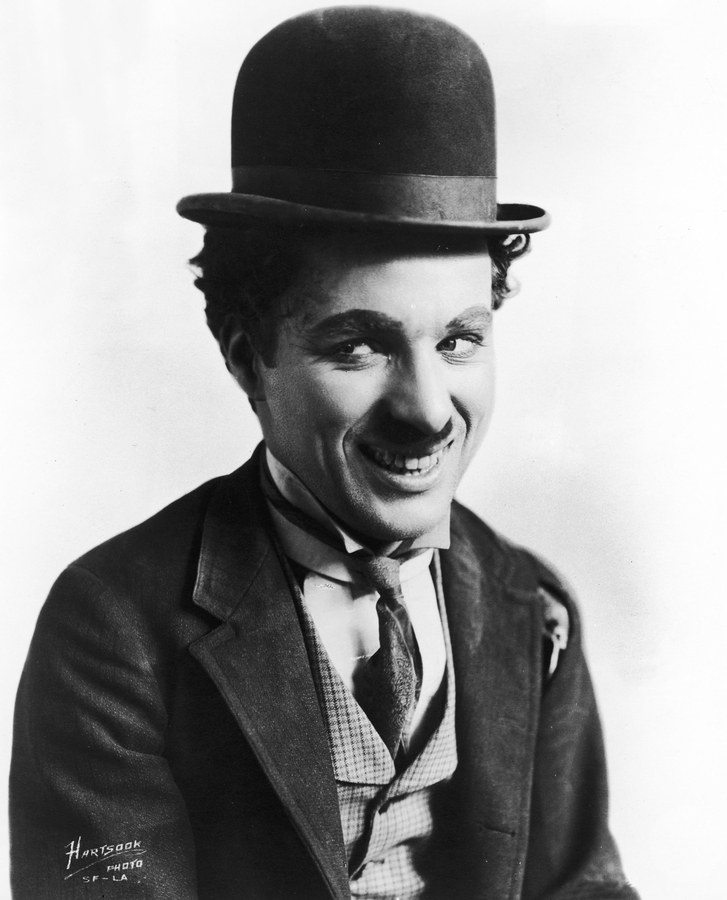
Charlie Chaplin


Sir Charles Spencer Chaplin KBE was an English comic actor, filmmaker, and composer who rose to fame in the era of silent film. He became a worldwide icon through his screen persona, "The Tramp", and is considered one of the most important figures in the history of the film industry.

Pablo Picasso


Born : 25 October 1881 
Pablo Diego José Francisco de Paula Juan Nepomuceno María de los Remedios Cipriano de la Santísima Trinidad Ruiz y Picasso Málaga, Spain
Died : 8 April 1973 (aged 91) Mougins, France
Resting place : Château of Vauvenargues
Education : José Ruiz y Blasco (father) Real Academia de Bellas Artes de San
                      Fernando
Known for: Painting, drawing, sculpture, printmaking, ceramics, stage design,
                        writing
Notable work
La Vie (1903), Family of Saltimbanques (1905), Les Demoiselles d'Avignon (1907), Portrait of Daniel-Henry Kahnweiler (1910), Girl before a Mirror (1932), Le Rêve (1932), Guernica (1937), The Weeping Woman (1937)

Elvis Presley


He is famous as a Singer.
Born : January 8, 1935, Tupelo, Mississippi, U.S.
Died: August 16, 1977 (aged 42), Memphis, Tennessee, U.S.
Resting place: Graceland, Memphis, Tennessee
Occupation: Singer, actor
Awards: Presidential Medal of Freedom (ribbon).png Presidential Medal of Freedom (2018)
Genres: Rock and roll pop rockabilly country blues gospel rhythm and blues
Instruments: Vocals guitar piano

          The Romani are an ethnic group living mostly in Europe and the Americas. Romani are widely known in the English-speaking world by the exonym "Gypsies" (or Gipsies) and also as Romany, Romanies, Romanis, Roma or Roms; in their Romani language, they are known collectively as Romane or Romane (depending on the dialect).
Romani are widely dispersed, with their largest concentrated populations in Europe[citation needed], especially the Roma of Central and Eastern Europe and Anatolia, followed by the Kale of Iberia and Southern France[citation needed]. They arrived in Europe from the Middle East in the 14th century, either separating from the Dom people or, at least, having a similar history; the ancestors of both the Romani and the Dom left North India sometime between 6th and 11th century.
          Since the 19th century, some Romani have also migrated to the Americas. There are an estimated one million Roma in the United States; and 800,000 in Brazil, most of whose ancestors emigrated in the nineteenth century from eastern Europe. Brazil also includes Romani descended from people deported by the government of Portugal during the Inquisition in the colonial era. In migrations since the late nineteenth century, Romani have also moved to Canada and countries in South America.

They are wandering and working at various places.
They have one dream that one day they will go to a native place and people will accept it.